 FA
FA  EN
EN  FR
FR  ES
ES  KO
KO  PT
PT  ZH
ZH  AR
AR  RU
RU  NL
NL  MS
MS  VI
VI  PH
PH  TH
TH  ID
ID 

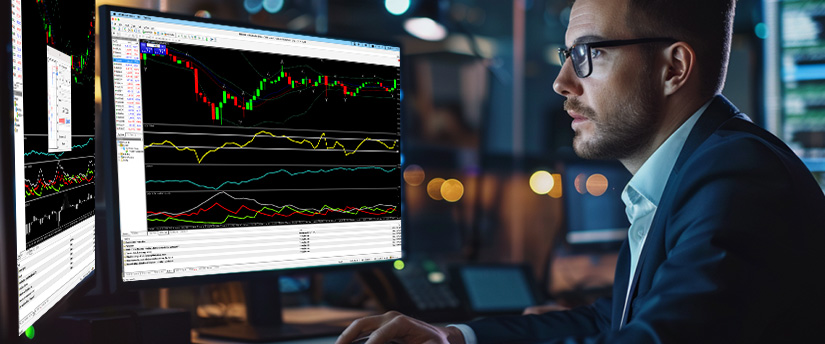
Metals trading has been part of financial markets for a very long time. Understanding the basics of metals trading helps traders worldwide make informed decisions. From gold و silver to industrial metals like copper and aluminium, metals are key in the global economy.
Nowadays, trading metals is very easily accessible, more than ever actually. This allows traders to speculate on price movements without owning the underlying asset.
Understanding how metals trading works, what affects prices and how traders approach this market is very important. This article goes through the basics of metals trading in a clear and simple way.
Basics of metals trading, what is and how it works?
Metals trading involves speculating on the price movements of both precious and industrial metals. Rather than buying physical gold bars or silver coins, the majority of traders use financial instruments such as CFDs to get into online metals trading.
When trading metals, you are not buying the metal itself but rather you are speculating on whether its price will go up or down. If your speculation is correct, you may generate revenue from price movements. If not, you might take a loss.
Metal prices go up or down depending on how much of the metal is available, how much people want to buy و how traders feel about the market.
What types of metals can you trade?
Generally, there are two main categories for metals; precious metals و industrial metals, often referred to as base metals. Each category has a different behaviour. Also, different factors usually affect each category.
Precious metals hold value because they are rare, and investors often view them as safe-haven assets during periods of economic or political uncertainty.
Traders most commonly trade gold, silver, platinum, and palladium. Investors widely see gold as a safe-haven asset during market volatility, while silver attracts both investment and industrial demand.
Automakers and industries mainly use platinum, while manufacturers rely on palladium for cars and emissions control. Traders usually trade the first two most actively because they offer high liquidity and face strong global demand.
Industrial, or base, metals, on the other hand, industries frequently use in manufacturing, construction, and infrastructure. Their value rises and falls with economic growth and industrial demand. Traders often watch copper as a key industrial metal and an indicator of overall economic health.
Industries widely use aluminium in construction, transportation, and packaging, while manufacturers rely on nickel for stainless steel and battery production. During periods of economic expansion, industrial metals’ prices tend to go up whereas when growth is slow, they tend to weaken.
Why traders choose metals
Metals provide the opportunity to diversify your portfolio as they have a different behaviour compared to currencies or stocks. Gold for instance, might go up when the stock market drops. This helps balance the overall risk.
As mentioned earlier, investors often view precious metals as safe havens during economic uncertainty, inflation, or geopolitical tension. Traders turn to these metals for stability whenever confidence in financial markets declines.
There is high activity in metals markets with very frequent movements in prices, driven by global news, economic data and changes in supply and demand. That’s why there are regular trading opportunities.
Access to metals markets is very easy due to online trading platforms. Traders can trade both rising and falling prices with leverage.
What affects metals’ prices?
Just like any other commodity, metals are influenced by how much is available as well as how much is needed. Mining affects supply, while demand comes from industry, jewellery and interest from traders.
Base metals usually have a nice performance when there is economic growth. This happens because factories and construction projects increase demand whereas when there is an economic slowdown, this can reduce demand and push prices lower.
Inflation and interest rate decisions are two other factors affecting precious metals’ prices. When inflation is up and interest rates are down, gold for example might become more appealing as a store of value.
Metals’ prices in U.S dollars. Therefore, a stronger USD often pressures metal prices while a weaker USD may support higher prices.
Last but not least, uncertainty in politics or conflicts and crises globally may increase demand for metals like gold and silver.
How to trade metals online
Traders can trade metals markets through Contracts for Difference (CFDs), which offer flexibility and convenience.
With CFDs, you actually speculate on price movements without owning the underlying metal. You can either go long, or buy if you expect prices to increase, or go short, that is sell, if you expect prices to decrease.
Leverage is also allowed with CFDs, meaning that traders can control larger positions with a smaller initial capital. However, this can increase potential profits but risks as well.
Volatility in metals trading
Volatility has to do with the movement of prices over a specific time period. There are usually periods of high volatility in metals, especially when economic data is released, central bank announcements are made, key geopolitical events happen and unexpected changes in supply occur.
Usually with higher volatility come more opportunities. However, risk increases too. Therefore, learning how to manage volatility is a key part of metals trading.
Managing risk when trading metals
Risk management is very important when trading metals, irrespective of your experience level. Experienced traders focus on protecting their capital, so they apply some techniques to manage risk like using stop-loss orders to limit losses, managing the size of their position, avoiding overleveraging and diversifying their portfolio across various markets.
Every trader should know that losses are part of the trading journey and that consistency is more important than generating fast revenue.
Common strategies to trade metals
There are different approaches used by various traders when trading metals. Trend trading is one of these strategies and involves identifying a clear upward or downward trend and trading in this trend’s direction.
Trading the news is also useful because metal prices can be affected by news or economic events. In the range trading strategy, traders buy near the lower boundary of a trading range and sell near the upper boundary.
Since prices move quickly, trading metals can be challenging. Trading emotions like fear or greed can make you buy too late or keep losing trades for too long. With a solid trading plan in place, sticking to the rules you have set, and controlling emotions can make your trading more efficient.
Final thoughts
Trading metals enables access to some of the most crucial and actively traded markets around the world. It is vital to understand the basics of metals trading whether you are interested in metals’ safe-haven nature or their reflection of economic growth.
If you learn how metals work and what drives their prices, you can approach metals trading with more confidence and clarity. After all, trading metals is not just about speculating on price movements but also about understanding trends globally, managing emotions and staying disciplined in a market that is constantly changing.
DISCLAIMER: This information is not considered as investment advice or an investment recommendation, but is instead a marketing communication.


 JA
JA 





