VI
 EN
 FR
 ES
 KO
 PT
 ZH
 AR
 FA
 RU
 NL
 MS
 PH
 TH
 ID



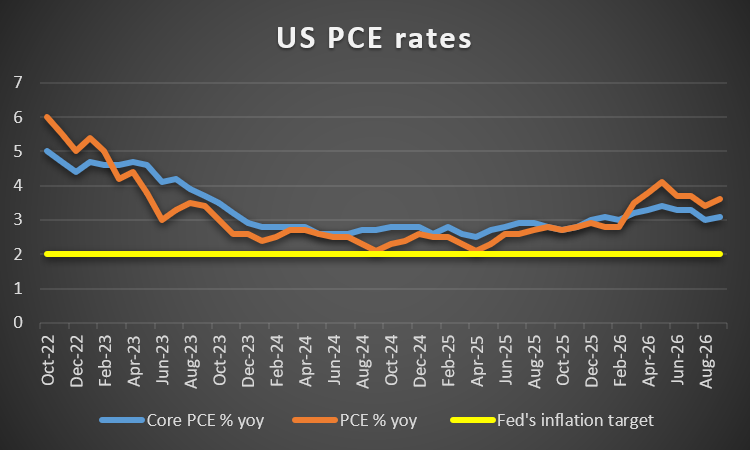
USD – October’s US PCE rates to be the next big test for the USD
The USD is on track to record another week of gains in the FX market, despite experiencing a downward correction yesterday. Expectations of further monetary policy tightening by the Federal Reserve remain the primary factor supporting the US dollar. With a relatively quiet US economic calendar and few high-impact data releases scheduled, market attention is likely to focus on fundamental developments, particularly comments from Fed officials. A hawkish stance could provide further support to the USD, whereas should Fed policymakers start easing on their hawkishness we maysee the USD slipping. Given the market’s worries for inflationary pressures in the US economy, and their effect on the Fed’s intentions, we highlight the release of the US PCE rates for October, the Fed’s favourite inflaiton gauge, next Wednesday. Should the rates accelerate, we may see the USD getting some support as the market’s expectations for a possible faster tightening of the Fed’s monetary policy could be enhanced. Should on the flip side, the rates slow down, signalling an easing of inflationary pressures in the US economy, we may see the market being caught off guard, and being forced to ease its hawkish expectations by selling the USD. Also please note that next Thursday is to be the US Thanksgiving public holiday, while some US stock markets are to be closed for Friday as well, which could create conditions of thin trading in the markets.
JPY – Hawkish expectations for BoJ support the Yen
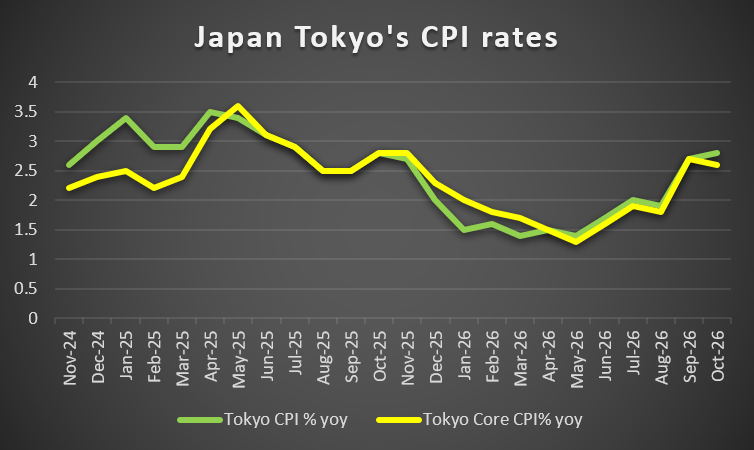
Meanwhile, in Asia, the Japanese yen continues to strengthen, recording broad-based gains throughout the week. It’s characteristic that the Japanese currency, is in the greens for the week against the USD, the GBP and EUR, signalling a wider strength in the FX market. From a fundamental perspective, the BoJ appears to be stepping up its efforts to reinforce market confidence in its hawkish monetary policy stance. The acceleration in Japan’s October CPI figures, which remain above the central bank’s 2% target, both on a core and a headline level, has further reinforced the BoJ’s position for the necessity of a monetary policy tightening, providing additional support to the yen during today’s trading session. Currently the market expects Bank of Japan to hike rates in its meeting on the 18th of December, and JPY OIS imply a probability of 69.2% for such a scenario to materialise. Hence we would highlight BoJ board member Tamura who is scheduled to speak next Thursday. As for financial releases, we intend to concentrate on inflation and note the release of BoJ’s core CPI rate next Wednesday and Tokyo’s CPI rates for November next Friday. A possible acceleration of the rates could be regarded as another signal of intensifying inflationary pressures in the Japanese economy, fuelling furhter hawkish expectations for the BoJ, thus may possibly porivde some support for JPY. Also we note that on Monday it’s a public holiday in Japan.
AUD – Australia’s October CPI rates in focus
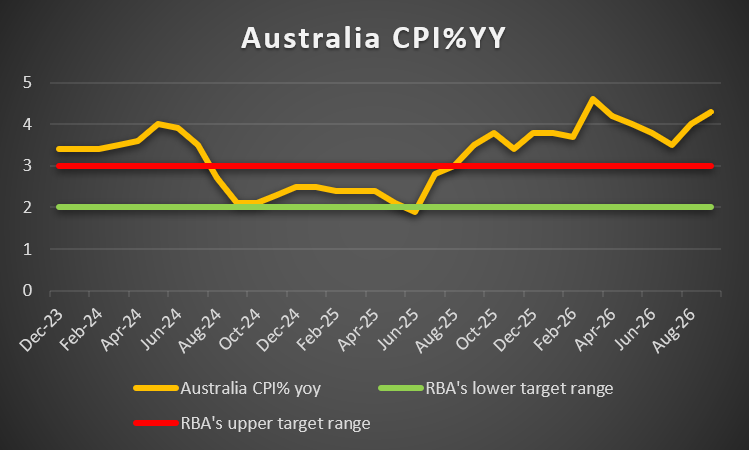
AUD is about to end the week deeply in the reds against the USD, with AUD/USD reaching low levels not seen since the start of the year. On a monetary level the focus is on inflation for Aussie traders. In RBA’s latest meeting minutes, the balance of power within the bank seemed to be split on whether to hike rates or not with three members being against a monetary policy tightening. The market now expects the bank to remain on hold in the coming months, which tends to weigh on the Aussie, given that the interest rate differentials with central banks expected to hike rates like the Fed tend to exercise bearish pressures on the Aussie. Actually the weakening of the Australian employment market in the past month with the employment change figure remaining deep in the negatives and the unemployment rate jumping to 4.9%, advises caution to the bank. It all comes down to inflation also in the macroeconomic level, hence we highlight the release of Australia’s CPI rates for October on Wednesday. A possible acceleration of the rates could provide some support for the Aussie as the rate would remain well above RBA’s inflation tolerance zone of the 2-3%. Other than that we also note on a deeper fundamental level the role that the market sentiment could play on the AUD’s direction. A possibly more risk on market sentiment could provide some support for AUD which is considered as a more risky asset in the FX market. Conversely a possible risk-averse market sentiment could weigh on AUD.
JPY – Hawkish expectations for BoJ support the Yen
Meanwhile, in Asia, the Japanese yen continues to strengthen, recording broad-based gains throughout the week. It’s characteristic that the Japanese currency, is in the greens for the week against the USD, the GBP and EUR, signalling a wider strength in the FX market. From a fundamental perspective, the BoJ appears to be stepping up its efforts to reinforce market confidence in its hawkish monetary policy stance. The acceleration in Japan’s October CPI figures, which remain above the central bank’s 2% target, both on a core and a headline level, has further reinforced the BoJ’s position for the necessity of a monetary policy tightening, providing additional support to the yen during today’s trading session. Currently the market expects Bank of Japan to hike rates in its meeting on the 18th of December, and JPY OIS imply a probability of 69.2% for such a scenario to materialise. Hence we would highlight BoJ board member Tamura who is scheduled to speak next Thursday. As for financial releases, we intend to concentrate on inflation and note the release of BoJ’s core CPI rate next Wednesday and Tokyo’s CPI rates for November next Friday. A possible acceleration of the rates could be regarded as another signal of intensifying inflationary pressures in the Japanese economy, fuelling furhter hawkish expectations for the BoJ, thus may possibly porivde some support for JPY. Also we note that on Monday it’s a public holiday in Japan.
AUD – Australia’s October CPI rates in focus
AUD is about to end the week deeply in the reds against the USD, with AUD/USD reaching low levels not seen since the start of the year. On a monetary level the focus is on inflation for Aussie traders. In RBA’s latest meeting minutes, the balance of power within the bank seemed to be split on whether to hike rates or not with three members being against a monetary policy tightening. The market now expects the bank to remain on hold in the coming months, which tends to weigh on the Aussie, given that the interest rate differentials with central banks expected to hike rates like the Fed tend to exercise bearish pressures on the Aussie. Actually the weakening of the Australian employment market in the past month with the employment change figure remaining deep in the negatives and the unemployment rate jumping to 4.9%, advises caution to the bank. It all comes down to inflation also in the macroeconomic level, hence we highlight the release of Australia’s CPI rates for October on Wednesday. A possible acceleration of the rates could provide some support for the Aussie as the rate would remain well above RBA’s inflation tolerance zone of the 2-3%. Other than that we also note on a deeper fundamental level the role that the market sentiment could play on the AUD’s direction. A possibly more risk on market sentiment could provide some support for AUD which is considered as a more risky asset in the FX market. Conversely a possible risk-averse market sentiment could weigh on AUD.
US Equity markets – Sell everything?
US equities are poised to close the week firmly in negative territory, despite the highly anticipated IPO of Anthropic. Priced at an initial $83 per share, the stock surged by 34% at the opening of its first trading session, reflecting strong investor demand. Although it subsequently retreated from its intraday highs, it continued to trade comfortably above its IPO price. Yet Anthropic’s IPO did not seem to ease market worries for the development of AI. We consider broader market fundamentals remain a key driver of investor sentiment. Concerns surrounding the potential implications of AI developments, coupled with the Federal Reserve’s increasingly hawkish stance, continue to weigh on market confidence and could maintain pressure on US equities in the near term. The losses from recent high points of key tech shares like Core Weave, Oracle, SanDisk, Nebius, Intel, Arm, Dell, Micron, Nvidia, SpaceX, TSMC, Palantir, Tesla and AMD most recently, are quite telling of the pressure under which tech shares currently are. Given that the prementioned fundamental issues underlying the weakening of hi tech shares are unresolved, despite some ups and downs, we expect the bearish pressures to persist.
Gold – Bearish tendencies persist
The bearish run for gold’s price continued yesterday and the precious metal’s price reaching low levels not seen since early September 25. Market expectations for the Fed to tighten its monetary policy possibly at a faster pace weigh on the precious metal’s price and the negative correlation of the USD with gold’s price tends to add more selling pressure on gold. Hence should we see in the coming week Fed policymakers insisting on their hawkish narrative, we may see gold’s price losing some ground. Yet the drop of US yields may play a supportive role for gold as it eases the attractiveness of the US bond market as an alternative investment destination for gold traders. Furthermore, we suspect that central banks continue to buy gold limiting the precious metal’s losses. In the coming week, we consider the release of October’s US PCE rates for October as a potentially moving event for gold’s price. Should the rates accelerate signalling an intensification of inflationary pressures in the US economy, which in turn could enhance market expectations for a faster tightening of the Fed’s monetary policy and thus may weigh on gold’s price. On the flip side, a possibly slower than expected acceleration of the PCE rates could ease market expectations for the Fed to tighten its monetary policy and thus allow gold’s price to gain.
Oil – Caught between conflicting fundamentals.
Oil prices seem to be caught between conflicting fundamentals. On the one hand the tensions in the Middle East caused primarily by the US-Iran war, tend to intensify market worries for further tightening of the supply side of the international oil market, supporting oil prices. Its characteristic how oil prices moved higher in today’s Asian session as on a fundamental level, attacks of Houthi rebels on Riyadh, Saudi Arabia’s capital, tended to intensify market worries for tensions in the Gulf region. On the other hand, continued expectations for a glut in the oil market tend to weigh on oil prices. Its characteristic how in the past few days US oil inventories continued to be on the rise signalling a slack in the US oil market. Also exports for the Gulf region, seem to be picking up, further easing market worries for the supply side of the oil market. Furthermore the Trump, Xi, Putin summit resulted in a pledge to boost oil and refined petroleum production yet that may lie in the long run. Should we further easing of the market worries for the oil supply we may see its price dropping.
US Equity markets – Sell everything?
Gold – Bearish tendencies persist
The bearish run for gold’s price continued yesterday and the precious metal’s price reaching low levels not seen since early September 25. Market expectations for the Fed to tighten its monetary policy possibly at a faster pace weigh on the precious metal’s price and the negative correlation of the USD with gold’s price tends to add more selling pressure on gold. Hence should we see in the coming week Fed policymakers insisting on their hawkish narrative, we may see gold’s price losing some ground. Yet the drop of US yields may play a supportive role for gold as it eases the attractiveness of the US bond market as an alternative investment destination for gold traders. Furthermore, we suspect that central banks continue to buy gold limiting the precious metal’s losses. In the coming week, we consider the release of October’s US PCE rates for October as a potentially moving event for gold’s price. Should the rates accelerate signalling an intensification of inflationary pressures in the US economy, which in turn could enhance market expectations for a faster tightening of the Fed’s monetary policy and thus may weigh on gold’s price. On the flip side, a possibly slower than expected acceleration of the PCE rates could ease market expectations for the Fed to tighten its monetary policy and thus allow gold’s price to gain.
Oil – Caught between conflicting fundamentals
Oil prices seem to be caught between conflicting fundamentals. On the one hand the tensions in the Middle East caused primarily by the US-Iran war, tend to intensify market worries for further tightening of the supply side of the international oil market, supporting oil prices. Its characteristic how oil prices moved higher in today’s Asian session as on a fundamental level, attacks of Houthi rebels on Riyadh, Saudi Arabia’s capital, tended to intensify market worries for tensions in the Gulf region. On the other hand, continued expectations for a glut in the oil market tend to weigh on oil prices. Its characteristic how in the past few days US oil inventories continued to be on the rise signalling a slack in the US oil market. Also exports for the Gulf region, seem to be picking up, further easing market worries for the supply side of the oil market. Furthermore the Trump, Xi, Putin summit resulted in a pledge to boost oil and refined petroleum production yet that may lie in the long run. Should we further easing of the market worries for the oil supply we may see its price dropping.